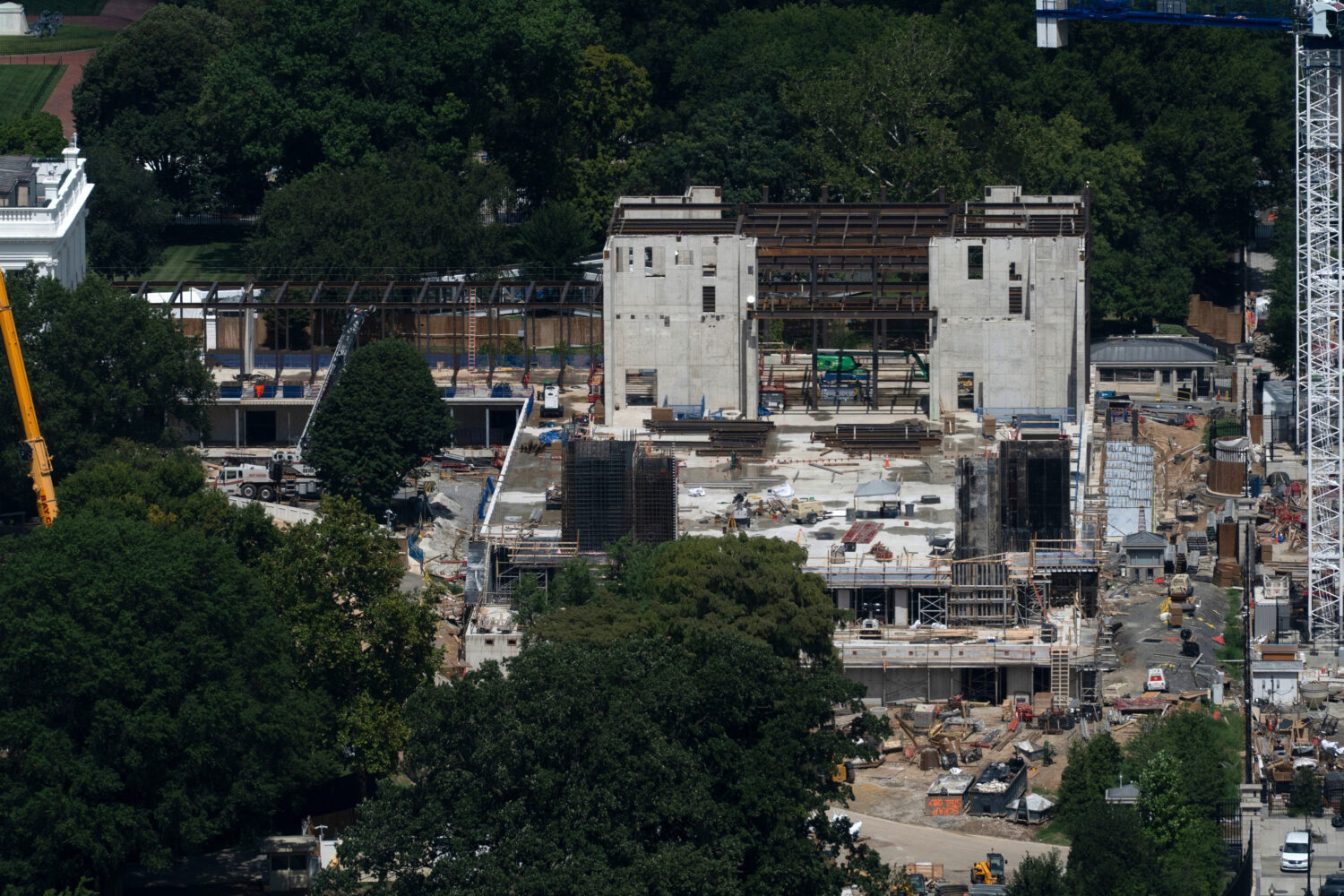





WASHINGTON — The U.S. Supreme Court on Monday allowed Donald Trump’s administration to continue construction of his White House ballroom project while the Republican president challenges a judicial order that would halt much of the development.The justices in a 5-4 ruling granted the administration’s request to block a lower court’s order halting above-ground construction of the $400 million ballroom while a lawsuit by a historic preservation group seeking to stop the project proceeds.The nonprofit National Trust for Historic Preservation sued last year after the administration tore down the White House East Wing and began building a 90,000-square-foot ballroom without seeking specific approval from Congress.
Trump has said the ballroom will be “the greatest of its kind ever built.”In an August 14 filing to the Supreme Court, Justice Department lawyers echoed Trump’s contention that the project is a security necessity, citing assassination attempts against the president and other recent threats.”This case involves an extraordinary and unlawful injunction that will halt the ongoing construction of the integrated military complex, including a totally secure ballroom space, at the East Wing of the White House, which is vitally required by national security,” they wrote.The project combines the above-ground ballroom with an extensive underground complex.
Trump has said the project includes bomb shelters, medical facilities, shielding from drones and missiles and other security features that are “all tied together as one big, expensive and very complex unit.”On August 7, the U.S. Court of Appeals for the District of Columbia Circuit in a 2-1 ruling upheld U.S. District Judge Richard Leon’s order directing the administration to halt above-ground construction.’A temporary tenant'”Each President is a temporary tenant, not the owner, of the White House,” and cannot fundamentally reshape it without congressional approval, the D.C.
Circuit’s ruling stated.The district judge’s order did not permanently bar construction of a ballroom. It blocked above-ground efforts while allowing below-ground construction to continue, as well as work deemed “strictly necessary” for the safety and security of the White House. In its ruling, the D.C. Circuit said national security arguments “are not an automatic get-out-of-law-free card.”The Justice Department said in its August 14 filing that the overall East Wing p