

00:00 Speaker A
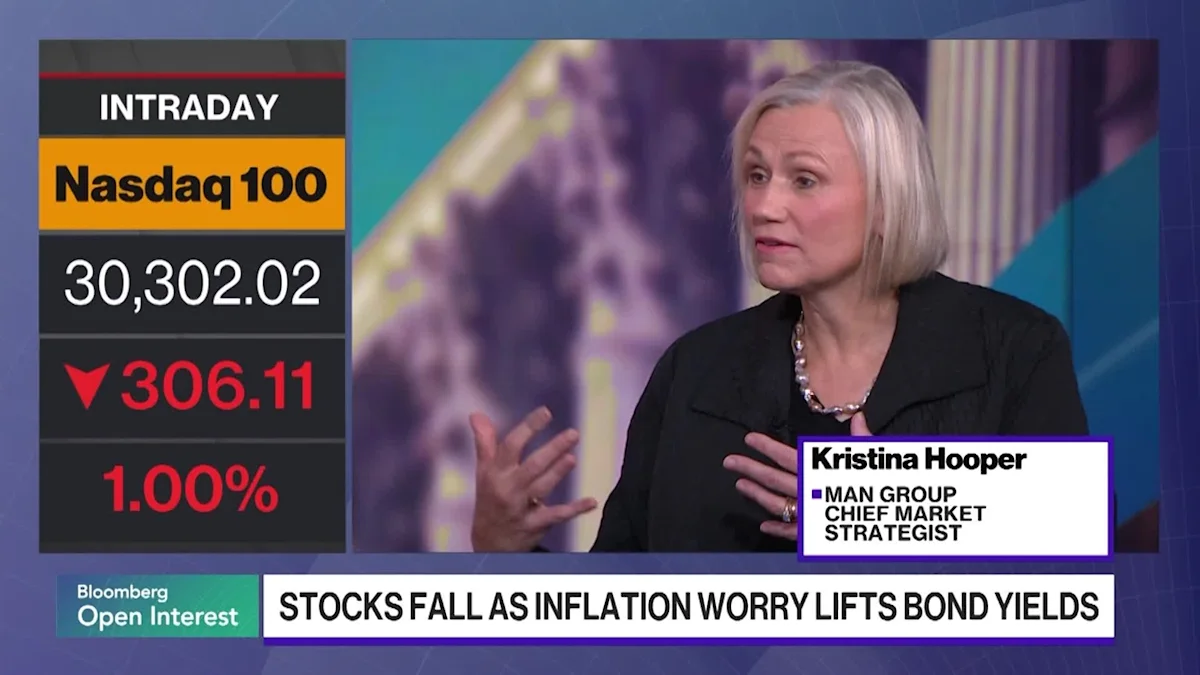
You’ve been writing about this idea of bond yields moving higher and for now, it’s been an incredibly resilient risk market. Stocks ended the week higher by more than 1%, even with bond yields at multi-decade highs. You’re concerned that that might not last. Why?
00:17 Speaker B
Well, something has to give. And I think that while many are saying, hey, yields are going up on the long end for the right reasons because the economy is strong and that’s what it’s telling us. That is true and also, I I think that, you know, having yields over 5% is not abnormal if we look at at history, but what is abnormal is how dramatically fast um yields have gone up on the long end and also what’s uh what’s a historical anomaly is how high our government debt load is. And so we have to recognize that even if yields are going up for the right reason, which I I don’t uh agree with, but but there’s there’s certainly some coherent arguments to make for that.
01:21 Speaker B
that still is going to weigh down on the US economy. And in fact, we got a bunch of different warnings last week on it. Uh Institute for International Finance. We heard from the OECD, we heard from the IMF. Um and several of them called out the US in particular, uh because we have a widening deficit to GDP ratio. We’re at about 6% now. And so that is a problem because that means that there are going to be more and more bond vigilante coming out as um investors recognize and believe the US is not as fiscally responsible as they’d like them to be.
02:12 Speaker A
Well, why don’t you buy the argument that strong economic data is what’s putting pushing yields higher? Because you’re entirely correct. Those who defend equity markets say that that is the reason why yields are moving higher and therefore equities can survive it.
02:27 Speaker B
Well, because I think there are just some other critical drivers like, for example, inflation. I mean, we started to see this take off uh after of course, the war began uh at the start of March, we saw yields start to go up pretty significantly.
02:46 Speaker B
Um that’s around concerns about inflation. And then of course, also fiscal sustainability. We are, we hit our our 40 trillion mark. We’ve we’ve had a lot of milestones uh in the last several months that I think have been part of why yields have gone up on the long end.
03:06 Speaker A
So, what’s most vulnerable in this market then when it finally caves into the pressure?
03:10 Speaker B
So, I I think that there are a number of things that could go wrong. First of all, what we have is a very financing dependent economy, right? Because increasingly AI CAPEX, which has been a huge driver of GDP growth thus far, is very reliant or is becoming more increasingly reliant on debt issuance. So when debt becomes more expensive, that’s problematic. We’ve already heard that the hurdle uh is quite high to make back one’s money, uh that return on investment for AI CAPEX. Um that’s actually going to get bigger uh with debt financing going up. And so I think that we have to recognize that it could easily slow. I mean, certainly there are other factors that could slow AI CAPEX, um but that is one of them. And then of course, there is that potential uh that as yields go up, they do draw investors away from equities. What we have seen is a lot of competition uh for investment dollars. Um treasuries have had to compete with uh AI related bond issuance uh and now they will have to compete uh and and now equities will have to compete with treasuries and uh those AI related corporate bonds.
04:54 Speaker A
Do you think we’re at that point yet where the yields on treasuries are attractive enough to pull investors away or is the underlying volatility of this bond market still a concern for giving us the the green light to dive into the market?
05:12 Speaker B
I think for most, they’re not high enough yet, but I think they could get there. I mean, we just sat and talked about this probably a few weeks ago and yields have gone up on the long end so much since then. So we could easily get to 5. 5% before year end and then we could probably draw some investors over. My other argument for why this can be problematic for the economy is just because the 10-year yield is so closely correlated with mortgage rates, is so closely correlated with a lot of consumer borrowing and we know the consumer is already under pressure. This is only going to add to that pressure.
05:54 Speaker A
But the consumer still has been spending, it’s this paradox, right? And you know, the K-shape has been talked about ad nauseum. Is there a level where it starts to break down that the middle of the K also has a problem that we can, I mean, I would be happiest if we could stop talking about the K shape, but obviously it would not be a great thing if that’s what causes the wider consumer to start to cave in. At what point do we get to that level where we cease to say, oh, it’s just the lower, the bottom income consumer that’s a problem, but the yes, the rest of it is still held up?
06:30 Speaker B
Well, let me start by saying that we don’t have to ever refer to the K-shape again because I think I think the bigger issue is that it is P-shaped when we think about net worth, right? And so that there is those top, the top tier of households have so much of the overall wealth in this country. And so that makes them very, very resilient in terms of spending, although they could certainly face headwinds from, for example, an equity sell-off. So if we get an equity sell-off because yields are going up, that could be quite problematic for consumer spending because so much of the consumer spending has been coming um from that that uh top part of the P. Um I think of it as, as uh um arms holding on to uh almost all the wealth.
07:37 Speaker A
That is such an interesting point, especially as we enter this rate hiking cycle. I I wonder how much again, this is not a great thing for this economy, but if the Fed has decided that in order to curb inflation that’s coming from oil markets, their only tool really is to hammer the consumer, if the wealth effect becomes increasingly important in that.
07:59 Speaker B
And let me also add this, um, typically raising rates, monetary policy tightening tends to be more effective when it’s about demand driven inflation. When you have supply shocks that are driving up inflation. There is a a limited potency from uh rate hikes. But that can be very problematic for consumers. And so that’s where stagflation risk increases.
08:49 Speaker A
How how big of a risk do you think that is at the moment?
08:52 Speaker B
I think it’s quite significant actually. Uh because I think that the US economy has been limited to two key drivers, right? We’ve got AI CAPEX and we’ve got consumer spending. Both are quite vulnerable. And so I could easily see an environment, not where we necessarily go into a full scale recession, but we see a significant slowdown and get to that point where we are very much in the throws of stagflation.
