

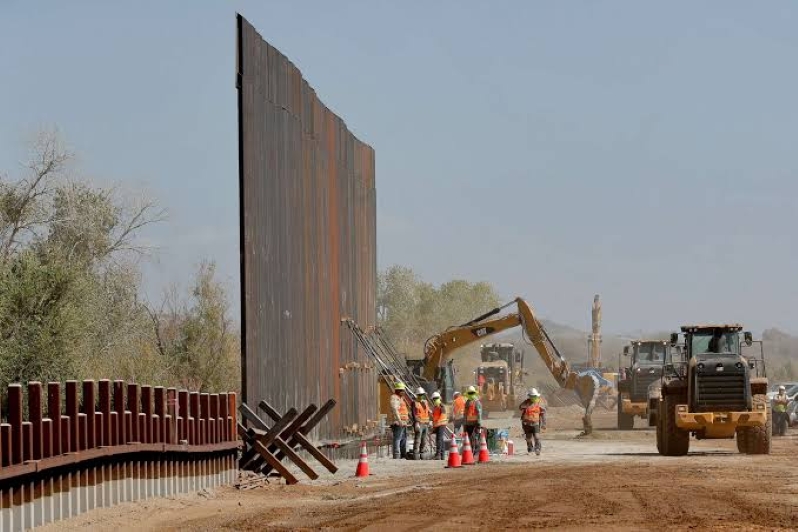
The US Supreme Court has cleared way for the Trump administration to resume construction of the border wall and supporting infrastructure across the Big Bend region in Texas, including parts of Big Bend National Park, following a major legal victory for the federal government on November 9, 2026.
The unsigned ruling suspends a federal judge’s order that had temporarily halted the controversial project. This means the Department of Homeland Security (DHS) and US Customs and Border Protection (CBP) to proceed with construction while the wider legal dispute continues.
The Supreme Court’s decision also represents a significant development in President Donald Trump’s efforts to expand border security infrastructure along the US-Mexico border. The administration has proposed more than 300 miles of barriers, patrol roads and associated infrastructure across the Big Bend. The Big Bend is a remote stretch of West Texas known for its rugged desert landscapes, canyons and protected wildlife habitats.
The project is being implemented under Section 102 of the Illegal Immigration Reform and Immigrant Responsibility Act of 1996. The legislation grants the Homeland Security Secretary authority to construct border barriers and roads in areas designated as experiencing high levels of illegal entry. It also permits the secretary to waive certain environmental and conservation requirements to accelerate construction.
Supreme Court Ruling on Big Bend Border Wall Project Removes Major Obstacle to Construction
The Supreme Court’s intervention follows an October 2026 decision by US District Judge Kathleen Cardone in El Paso, who temporarily blocked the administration’s construction activities. This is after finding that the government had potentially exceeded its authority in waiving environmental protection requirements.
The lawsuit was brought by the Center for Biological Diversity, a Big Bend-area river guide and Friends of the Ruidosa Church. The latter is an organization seeking to protect a historic church in the region.
The challengers argued that the administration’s decision to bypass environmental safeguards threatened protected landscapes and wildlife habitats. They are also of the view that historic properties and sections of the Rio Grande river corridor are at risk.
However, the Supreme Court concluded that the federal government’s interest in expediting border security construction outweighed the environmental, recreational and aesthetic concerns raised by the plaintiffs.
Justice Ketanji Brown Jackson was the only justice to publicly dissent from the decision.
Importantly, the November 9 ruling does not constitute a final resolution of the underlying legal dispute. Instead, it stays the lower court’s injunction while the administration pursues further Supreme Court review.
Scope of the Big Bend Border Infrastructure Project
The proposed wall covers more than 300 miles of the Big Bend border region. This is part of the approximately 500-mile Big Bend Border Patrol Sector.
Unlike conventional border wall developments involving continuous steel fencing, the proposed infrastructure combines different types of barriers and security installations adapted to the region’s terrain.
The Trump administration’s plans include six-foot vehicle barriers, supporting patrol roads and surveillance infrastructure. The wider border security program also incorporates sections of taller steel fencing, vehicle barriers and advanced monitoring technology.
Within Texas’ Big Bend National Park, the administration has outlined a 17-mile, non-contiguous vehicle barrier system rather than the continuous 30-foot pedestrian wall planned for some other border locations.
Construction activities will also involve land clearing, access road development and excavation in remote areas. Some sections of the proposed route pass through difficult terrain, including isolated canyons where extensive blasting may be required.
According to the administration, much of the construction across the wider Big Bend Sector will take place on privately owned land.
More Than $6 Billion in Border Security Contracts
The Big Bend wall development forms part of the Trump administration’s wider program to expand and reinforce border security infrastructure across the US-Mexico border.
According to reports, CBP has awarded five contracts worth more than $6 billion for border security improvements in the Big Bend region. The contracts cover fencing, vehicle barriers and surveillance technology. However, a complete breakdown of individual contract values and contractors has not been made public yet.
Congress also allocated $46 billion for broader border barrier construction under the administration’s border security funding program.
Additionally, CBP Commissioner Rodney Scott has indicated that construction across the wider southern border is progressing at approximately 12 miles per week. Scott also notes that the administration targets completion by the end of Trump’s second presidential term.
The agency has not yet announced a definitive restart schedule for all the suspended construction activities in Big Bend following the Supreme Court ruling.
Environmental Concerns and Local Opposition
Despite the Supreme Court’s decision, the project continues to face opposition from environmental organizations, local communities and landowners. Politicians from both sides of the political divide are also opposing the US-Mexico border wall project.
Big Bend National Park is recognized for its distinctive desert ecosystems, mountainous terrain and biodiversity. Conservation groups argue that road construction, excavation and barrier installation could fragment wildlife habitats. They also project that the construction could permanently alter sections of the protected landscape.
Opponents have also questioned the security justification for extensive physical barriers in the region, which historically records some of the lowest migrant apprehension figures along the US-Mexico border.
Furthermore, local businesses have warned that construction could undermine tourism, river recreation and other economic activities associated with the region’s natural landscape.
The Trump administration, however, maintains that additional infrastructure is necessary to address illegal crossings, drug trafficking and potential cartel activity. Federal officials have also argued that leaving sections of the border without barriers could create vulnerabilities that criminal organizations may exploit.
What Next for the Big Bend Border Wall Project?
The Supreme Court’s November 9 decision removes the immediate judicial obstacle to construction, giving DHS and CBP an opportunity to advance the project while the litigation continues.
The next major developments will likely involve the resumption of field construction, further clarification of the final barrier alignment and the administration’s handling of environmental and land-access concerns.
CBP is also expected to provide additional details about the revised construction plans, particularly the sections affecting Big Bend National Park and surrounding privately owned properties.
However, the wider legal battle remains unresolved. The Supreme Court’s stay is tied to the administration’s pursuit of further review, meaning the project’s legal position could change depending on subsequent proceedings.
For now, the ruling represents a significant step forward for Trump’s US-Mexico border wall program. This is while intensifying the debate over how the United States balances national security priorities with the protection of environmentally and culturally significant public lands.
Big Bend Border Wall Project Fact Sheet
Location: Big Bend region, West Texas
Border: US-Mexico international border
Lead government agencies: US Department of Homeland Security (DHS) and US Customs and Border Protection (CBP)
Relevant legislation: Section 102, Illegal Immigration Reform and Immigrant Responsibility Act of 1996
Overall proposed coverage: More than 300 miles of border infrastructure
Big Bend Border Patrol Sector: 500 miles
National park component: 17 miles of non-contiguous vehicle barriers
Infrastructure: Vehicle barriers, steel fencing in designated sections, patrol roads and surveillance technology.
Construction requirements: Land clearing, excavation, road development and blasting in difficult terrain.
Reported contracts: Five contracts valued at more than US$6 billion
Wider congressional funding: US$46 billion for border barrier construction
Construction progress benchmark: Approximately 12 miles per week across the wider southern border program.
Original construction interruption: August 2026 pause, followed by an October federal court injunction.
Latest milestone: November 9, 2026, US Supreme Court allows Big Bend border wall construction to resume while litigation continues.
Main controversy: Border security versus environmental conservation, tourism, private property and public access to the Rio Grande.
Who is Involved in the Big Bend Border Barrier and Security Infrastructure Project?
Department of Homeland Security (DHS) – Government department overseeing border security policy and infrastructure.
US Customs and Border Protection (CBP) – Project implementation and border infrastructure procurement.
US Border Patrol – Border surveillance, patrol operations and security enforcement.
Center for Biological Diversity – Environmental organization challenging the project.
Friends of the Ruidosa Church – Plaintiff representing historic preservation interests.
Big Bend-area river guide and landowner – Individual plaintiff challenging the construction.
National Park Service (NPS) – Agency responsible for managing Big Bend National Park.
US Supreme Court – Issued the November 9, 2026 ruling.
US District Court for the Western District of Texas – Initially halted construction through its October 2026 injunction.
