

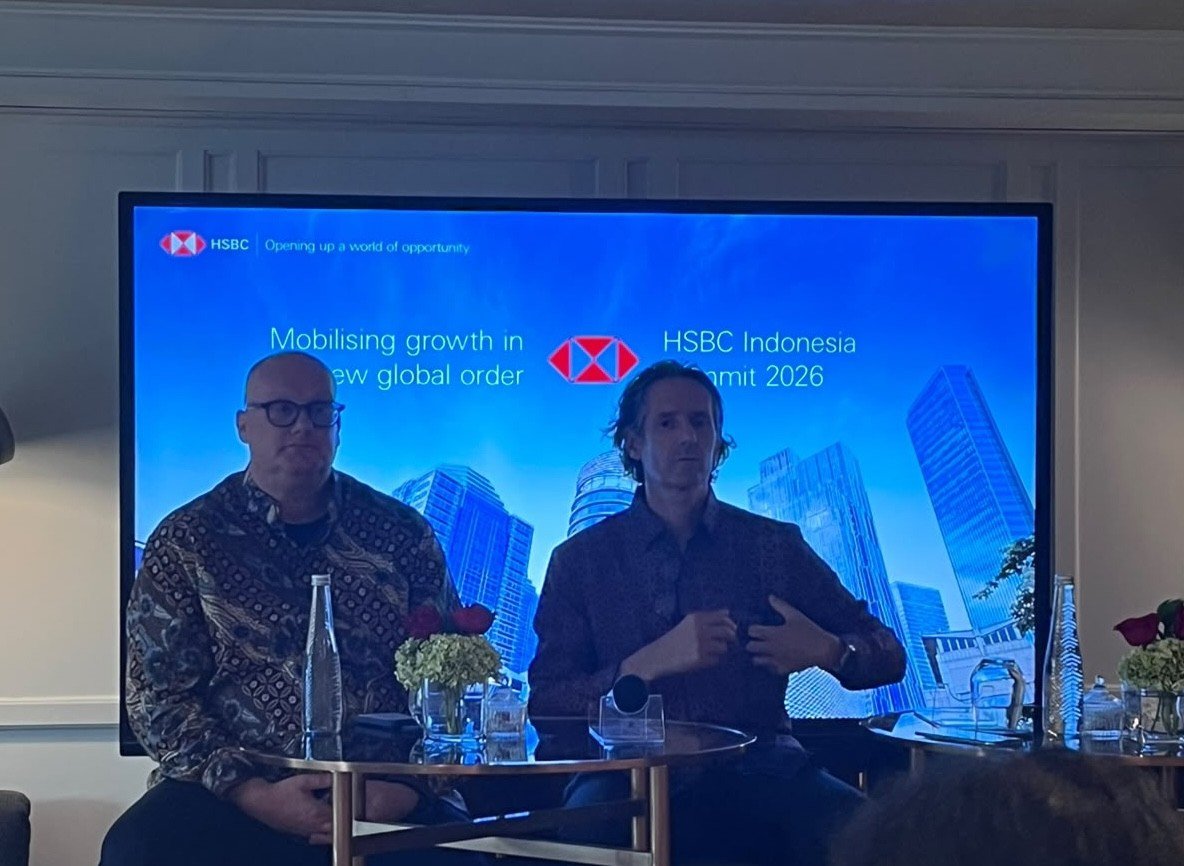
lobal banking giant HSBC projects that Indonesia’s economy will grow at a slower pace next year amid persistent global headwinds, despite the country’s resilience and renewed capital inflows.
“In the first half of the year, the economy grew 5.4 percent. Our forecast is that the full year will also be 5.4 percent, and next year we are forecasting 5.2 percent, so slightly slower but still very strong, given these shocks,” Frederic Neumann, HSBC chief Asia economist and cohead global investment research Asia, told a media briefing in Jakarta on Tuesday.
Neumann added that Indonesia was well-positioned to absorb external shocks, such as the rising energy costs triggered by the Iran war, while noting that the country had yet to see the full impact of the energy crisis on consumers, largely due to government subsidies.
“The Indonesian government has been able to afford these price controls, and I think that is an important anchor for stability for the economy,” he said.
Neumann also pointed out that food inflation “is relatively low” in the country despite the looming threats from this year’s powerful El Nino, cushioned by its better national food distribution system and role as a net food exporter.
He said rising global interest rates would not become a major drag on Indonesia’s economy, as the rupiah remained relatively stable and the banking industry continued to record accelerating loan growth.
“And we think the budget deficit will come in well under the 3 percent budget deficit legal cap for next year, reassuring foreign investors,” Neumann said. He pointed out that the country had seen “renewed capital inflows” on the back of foreign investors’ confidence in its macroeconomic stability.
