

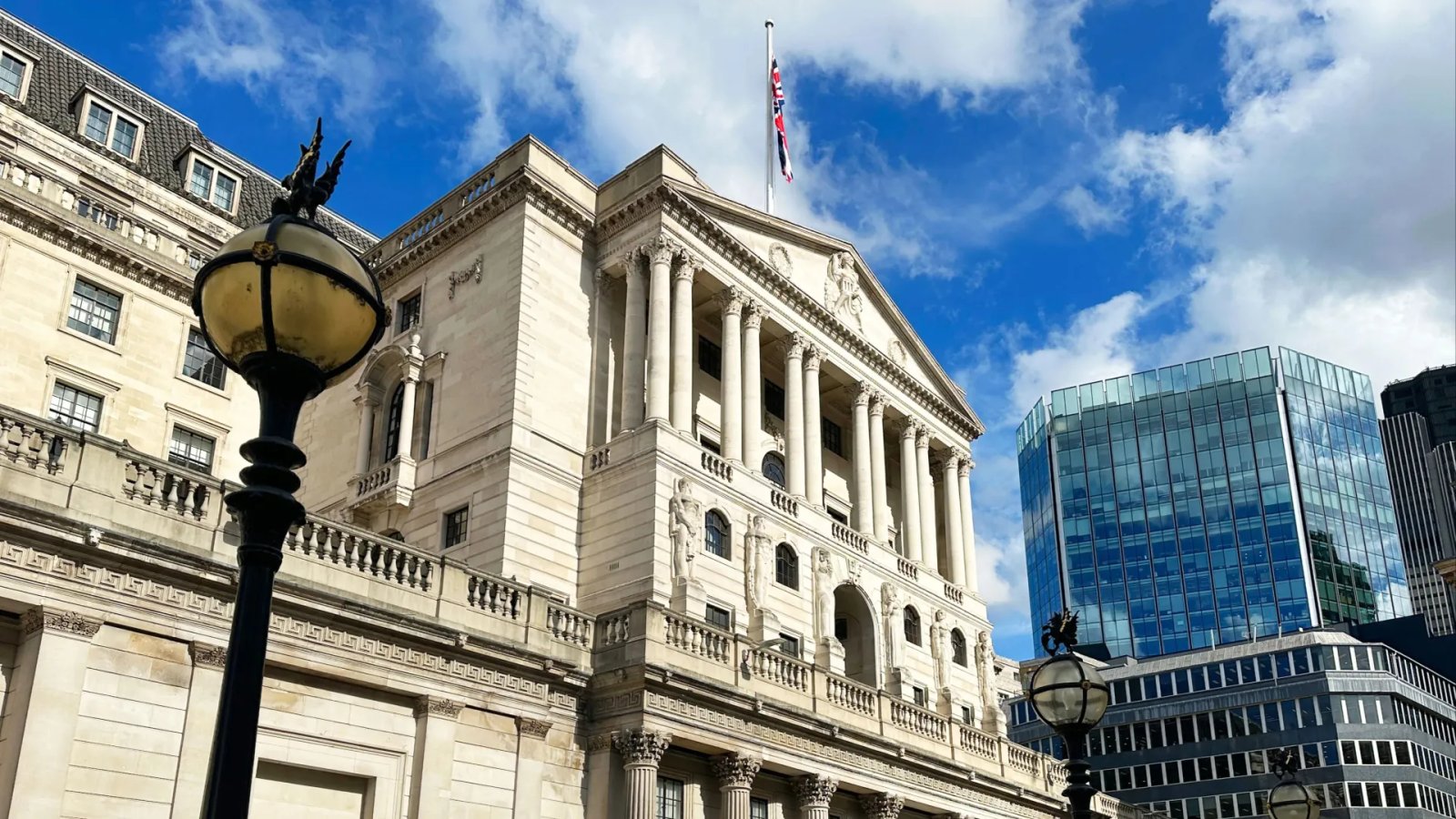
MILLIONS of mortgage holders have been dealt a fresh blow after a major bank warned the Bank of England will hike interest rates not once, but twice, before spring.
Morgan Stanley has changed its forecast and now predicts the Bank will raise borrowing costs in November and again in February, in a fresh headache for homeowners already battling soaring mortgage bills.
It marks a dramatic U-turn from the bank, which had previously said it did not expect any rate hikes for the foreseeable future.
Analysts Bruna Skarica and Fabio Bassanin said the situation had changed because of turmoil in global oil markets triggered by the escalating conflict in the Middle East.
They told clients: “While we still think – and with a decent degree of conviction – that any signs of an improvement in the supply in oil and refined products would leave the BoE on hold from here, it is challenging to maintain a prolonged hold as a modal call amid the recent Middle East newsflow.”
The Bank of England‘s base rate is the interest rate it charges other banks to borrow money, and it directly influences the rates those banks then charge ordinary customers for mortgages, loans and savings.

When the Bank raises its rate, high street lenders typically follow suit by pushing up the cost of new mortgage deals, meaning anyone remortgaging or taking out a new home loan ends up paying more each month.
It means that if the Bank does hike rates twice as predicted, homeowners coming off cheap fixed deals could be staring down even steeper mortgage bills than they already face.
The warning comes as mortgage rates are already at multi-year highs, with the average two-year fixed residential mortgage rate now sitting at 5.92%, according to Moneyfacts.
The average five-year fixed rate is even higher, at 5.94%, the highest level since October 2023, when mortgage rates spiked in the fallout from the disastrous mini-Budget under former Prime Minister Liz Truss.
Around one million British households have already rolled off cheaper fixed-rate mortgage deals since February, according to analysis of Bank of England data, and are now forking out between £50 and £70 more every month compared with their old rates.
Over a year, that adds up to an extra £840, while a homeowner refinancing a £500,000 mortgage could see their interest payments climb by more than £250 a month, or £3,000 a year.
The jump follows a wave of major lenders hiking their prices within the space of a week, including NatWest, Santander, HSBC and TSB.
Rachel Springall, a finance expert at moneyfactscompare.co.uk, warned there could be more pain to come.
She said: “Swap rates remain near 30-day highs, so there is still some uncertainty around the future direction of fixed mortgage pricing.”
She added: “More hikes could be coming if lenders have not yet caught up to higher swap rates.”
The Bank of England has estimated that around 750,000 households with fixed-rate deals set to expire in 2026 are currently locked into rates below 3 per cent, meaning many face a painful jump when they come to remortgage.
Springall warned that moving off these expiring deals “will be a huge shock for borrowers.”
Mark Harris, chief executive of SPF Private Clients, said anyone worried about rates rising further should act now rather than wait.
He said: “Mortgage offers are typically valid for six months, so if you are concerned that rates will rise further, it would be sensible to lock into a new deal ahead of time now.”
Crucially, if rates fall before the mortgage completes, most borrowers are able to switch to a cheaper offer instead, although it is worth double-checking your lender’s specific rules first.
Harris said the choice between a two-year and a five-year fix ultimately comes down to personal circumstances.
He said: “If you would struggle to pay the mortgage were rates to rise, then a fixed rate is a sensible option.”
